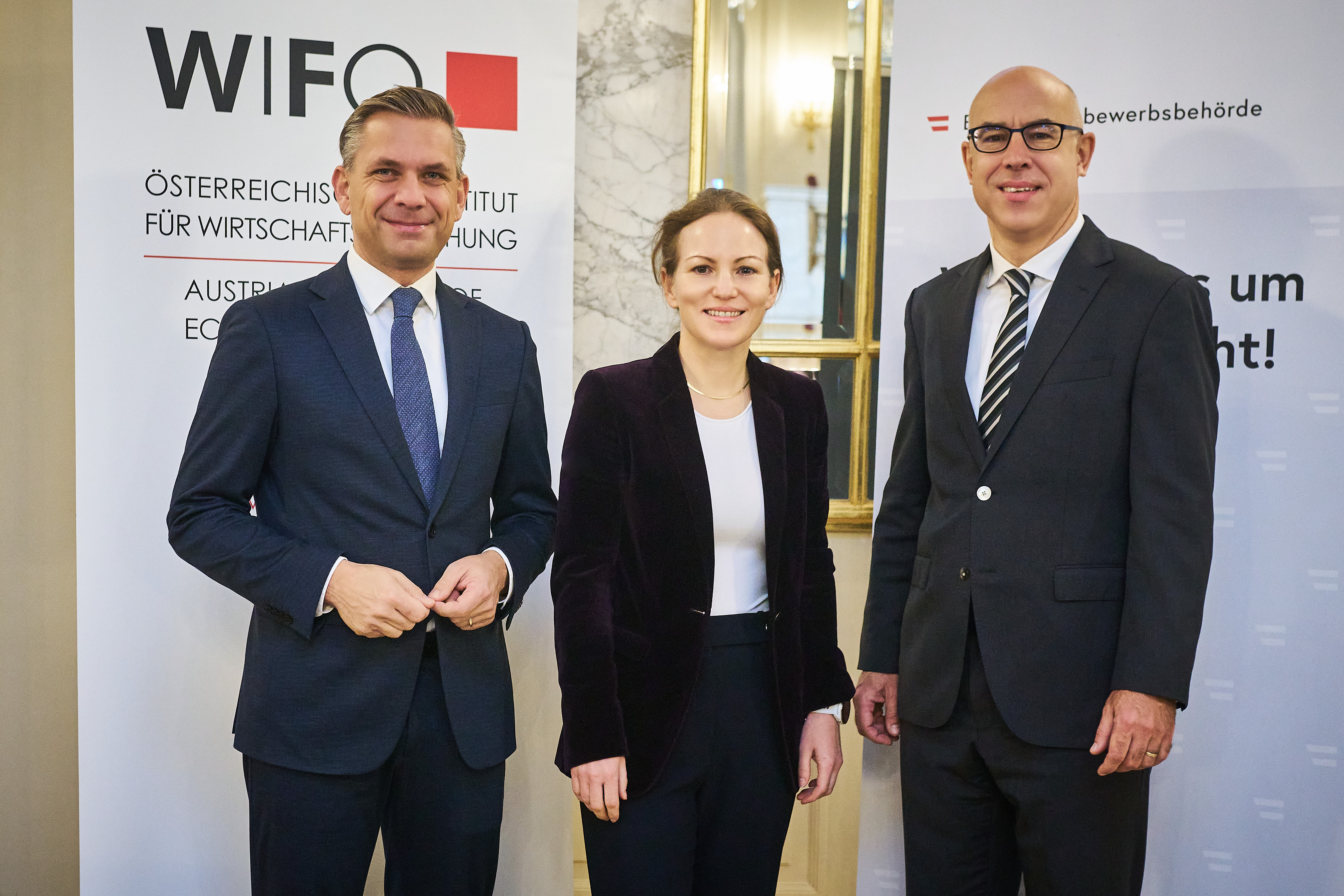
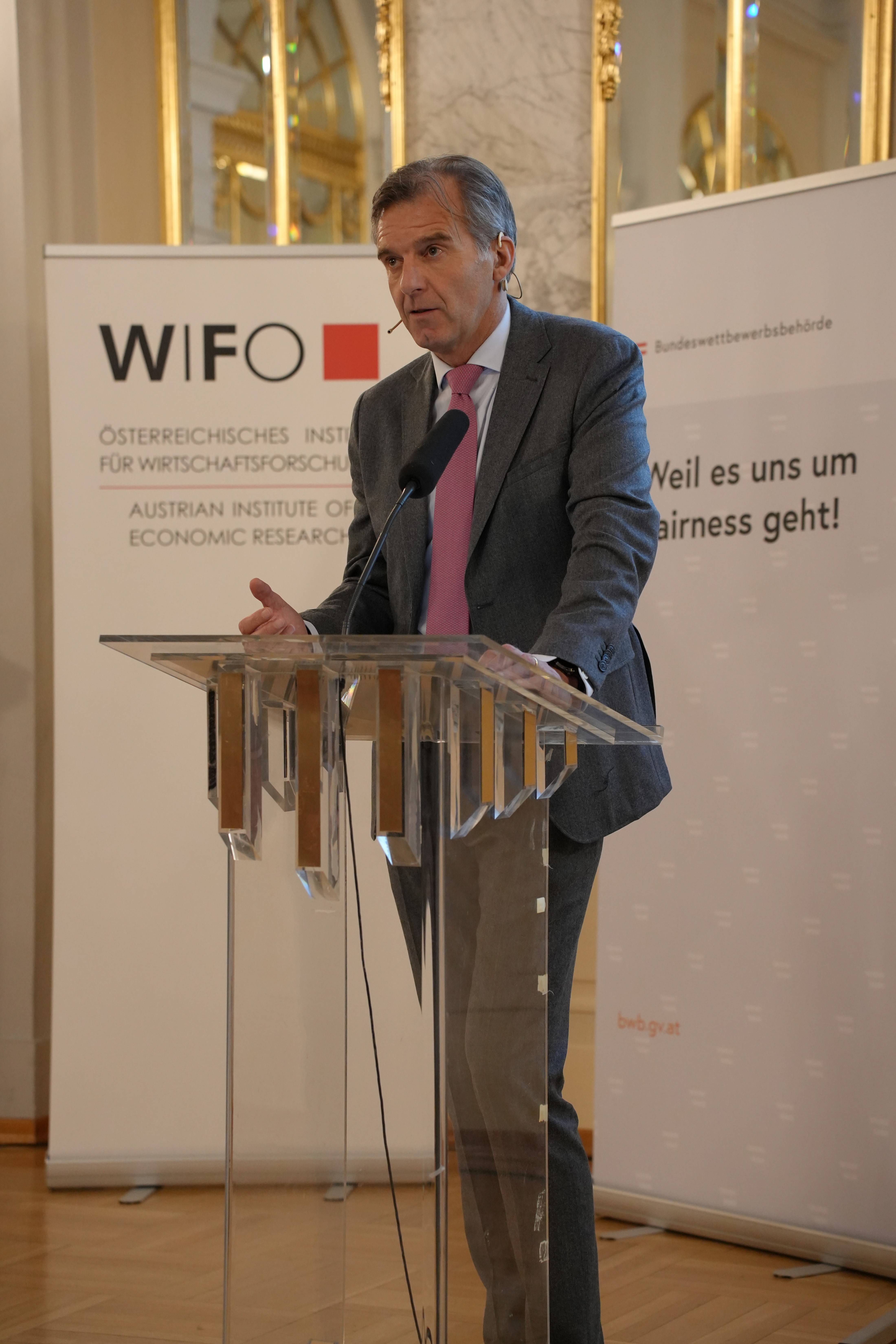
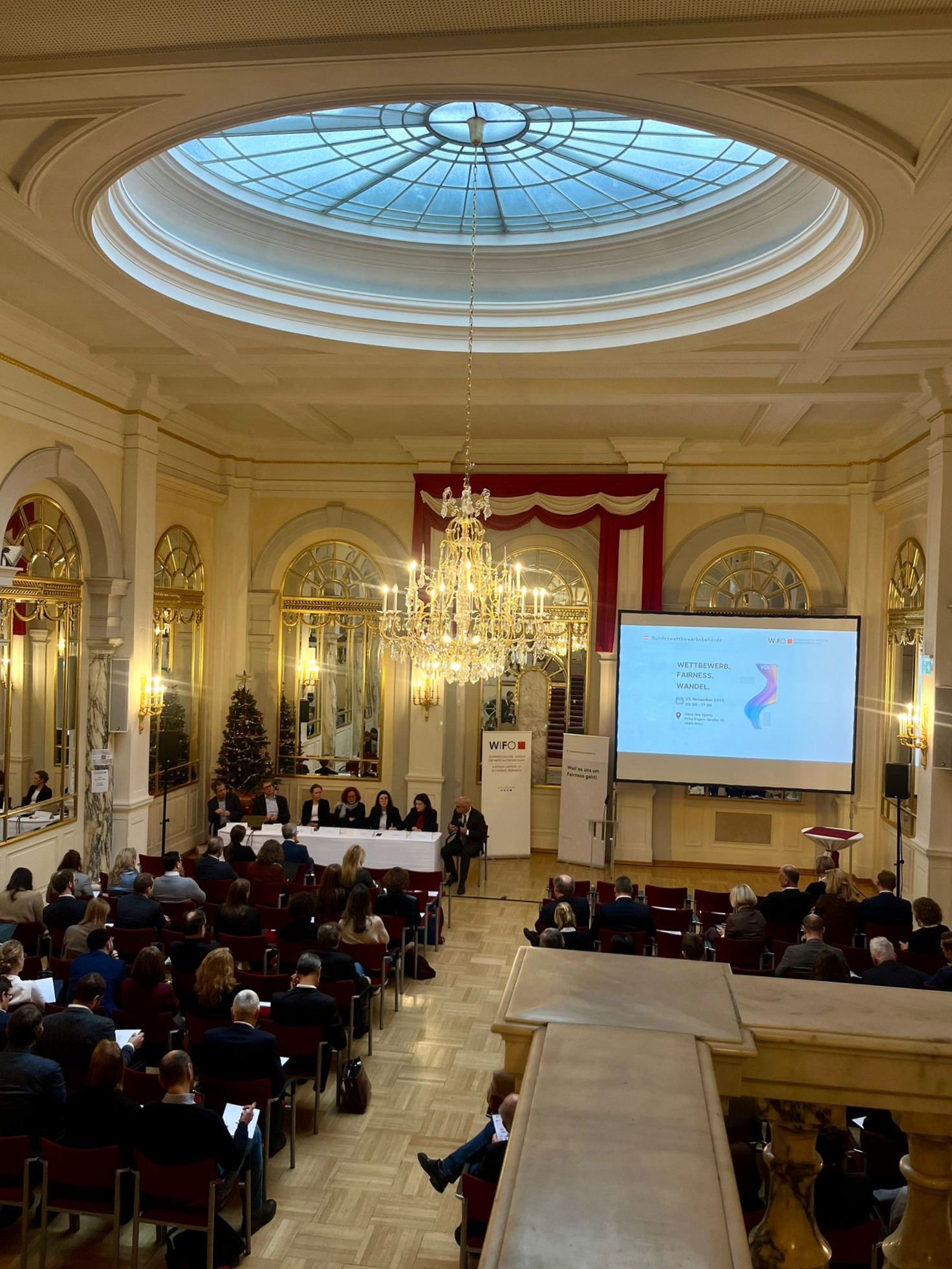
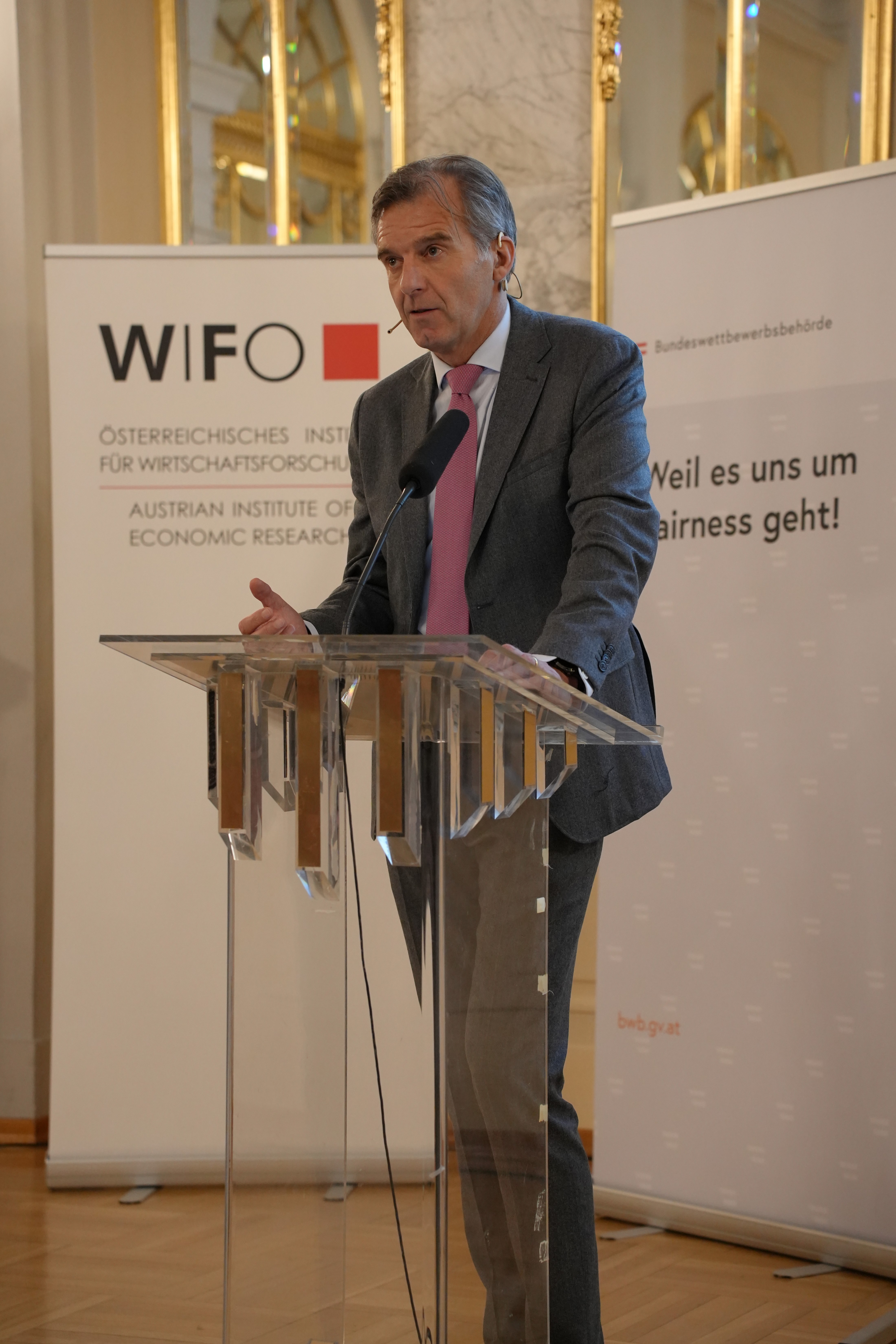
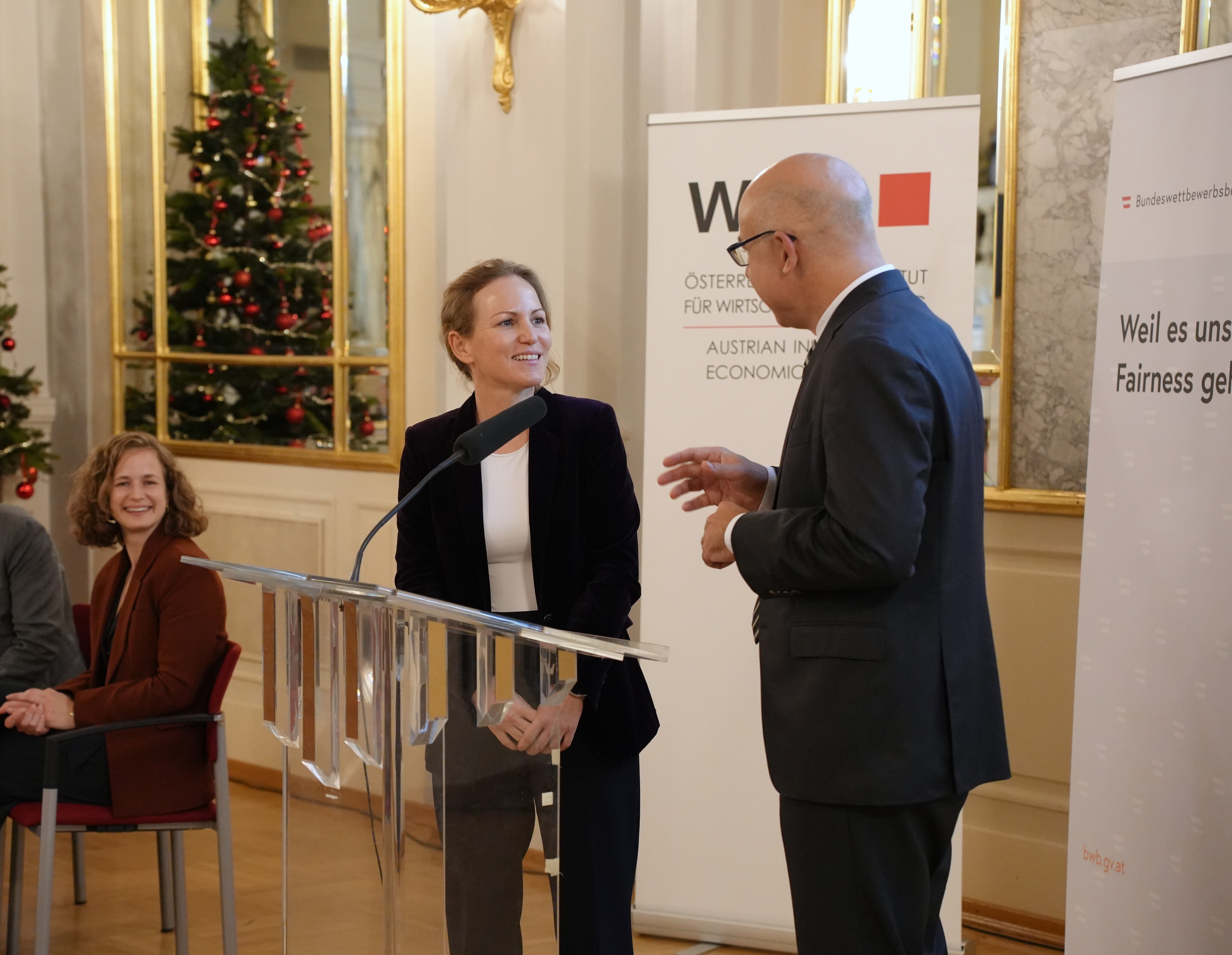
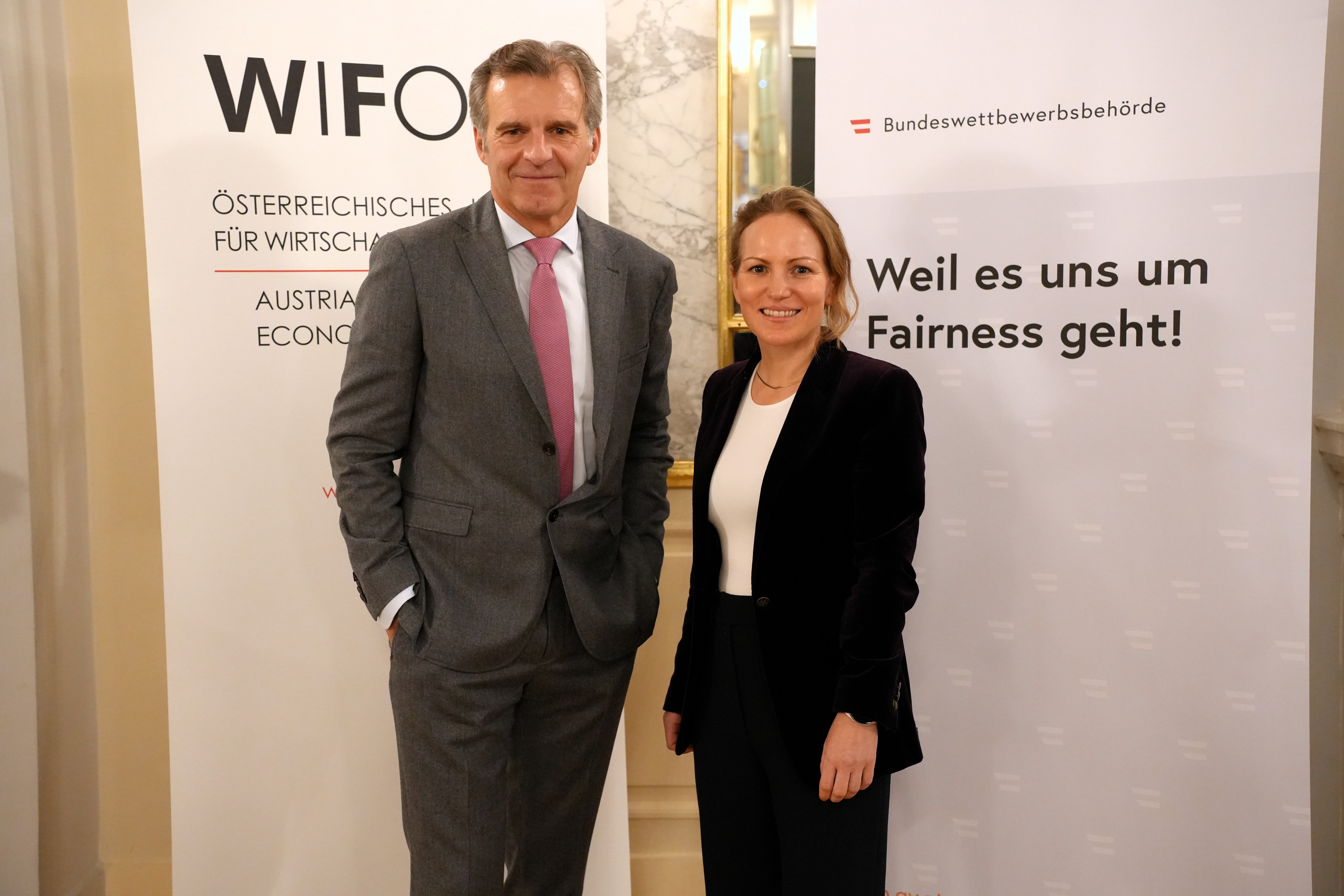
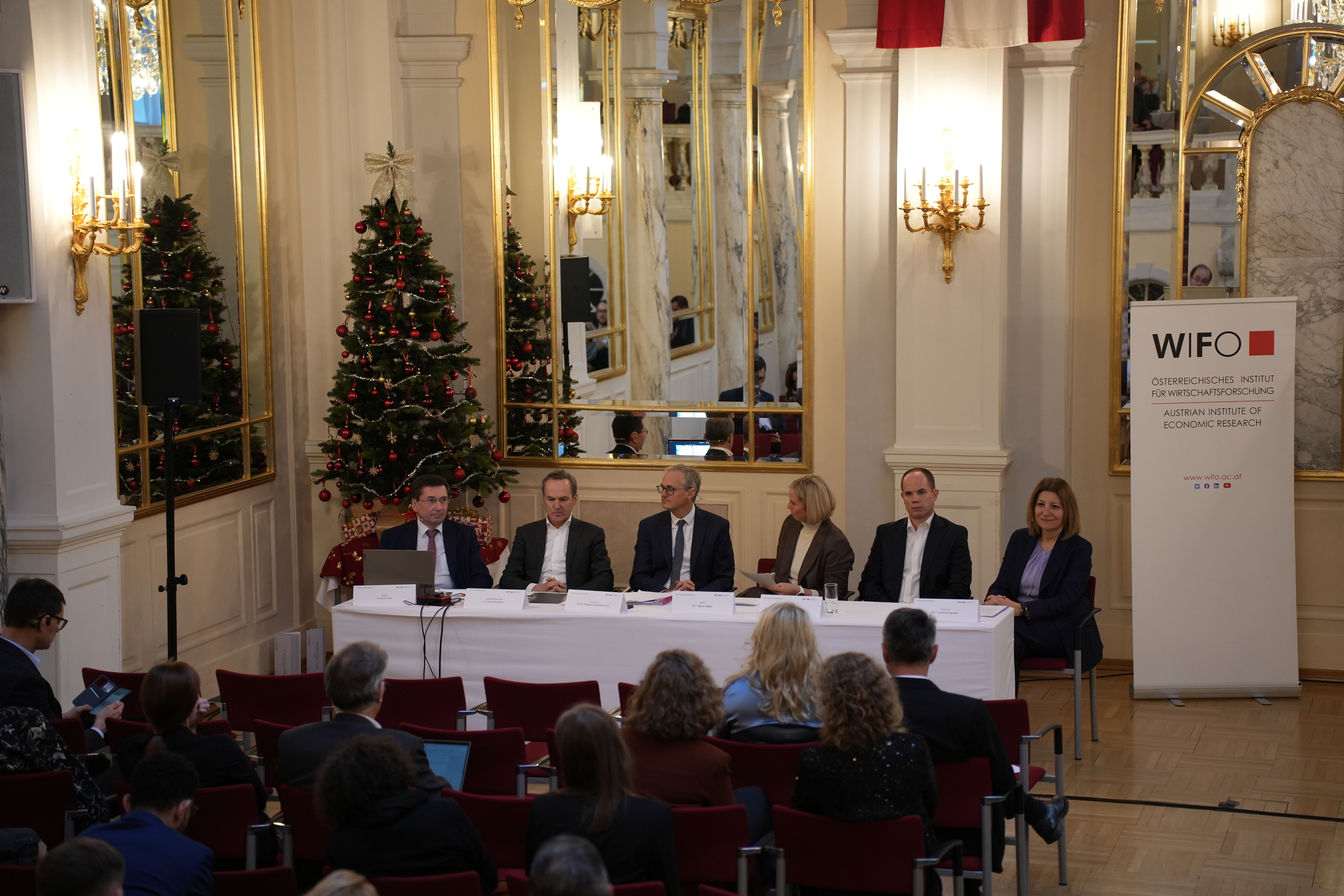
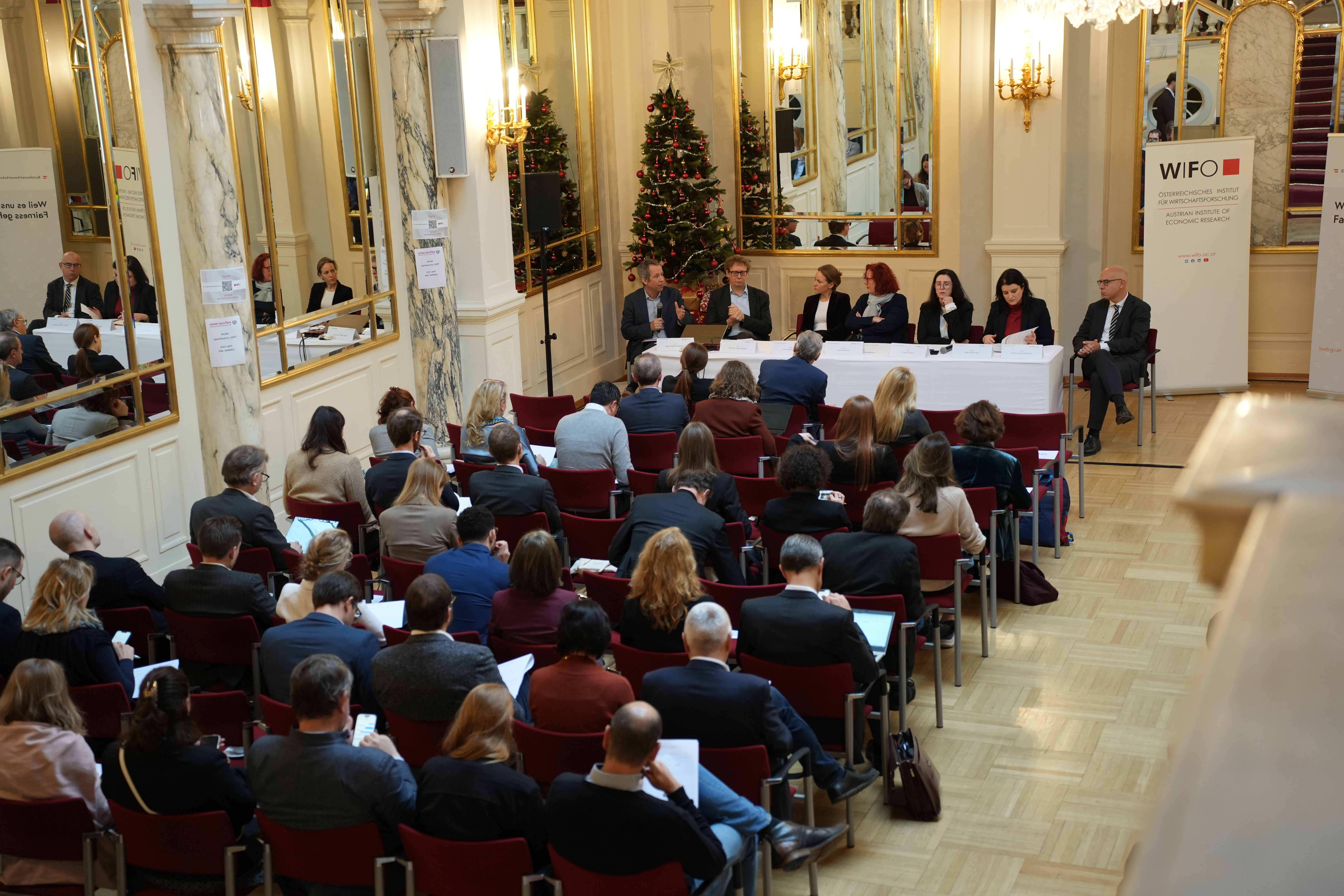
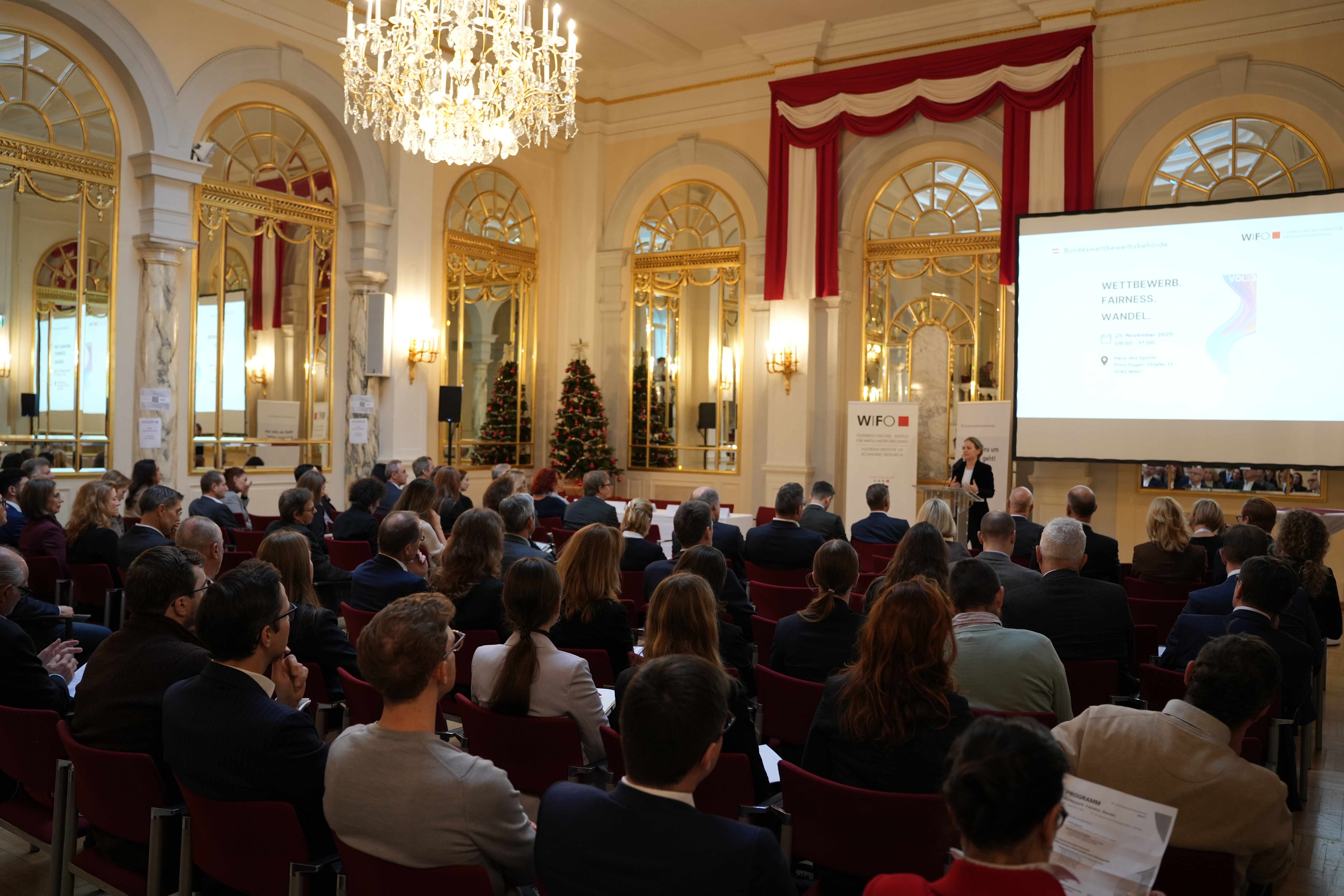
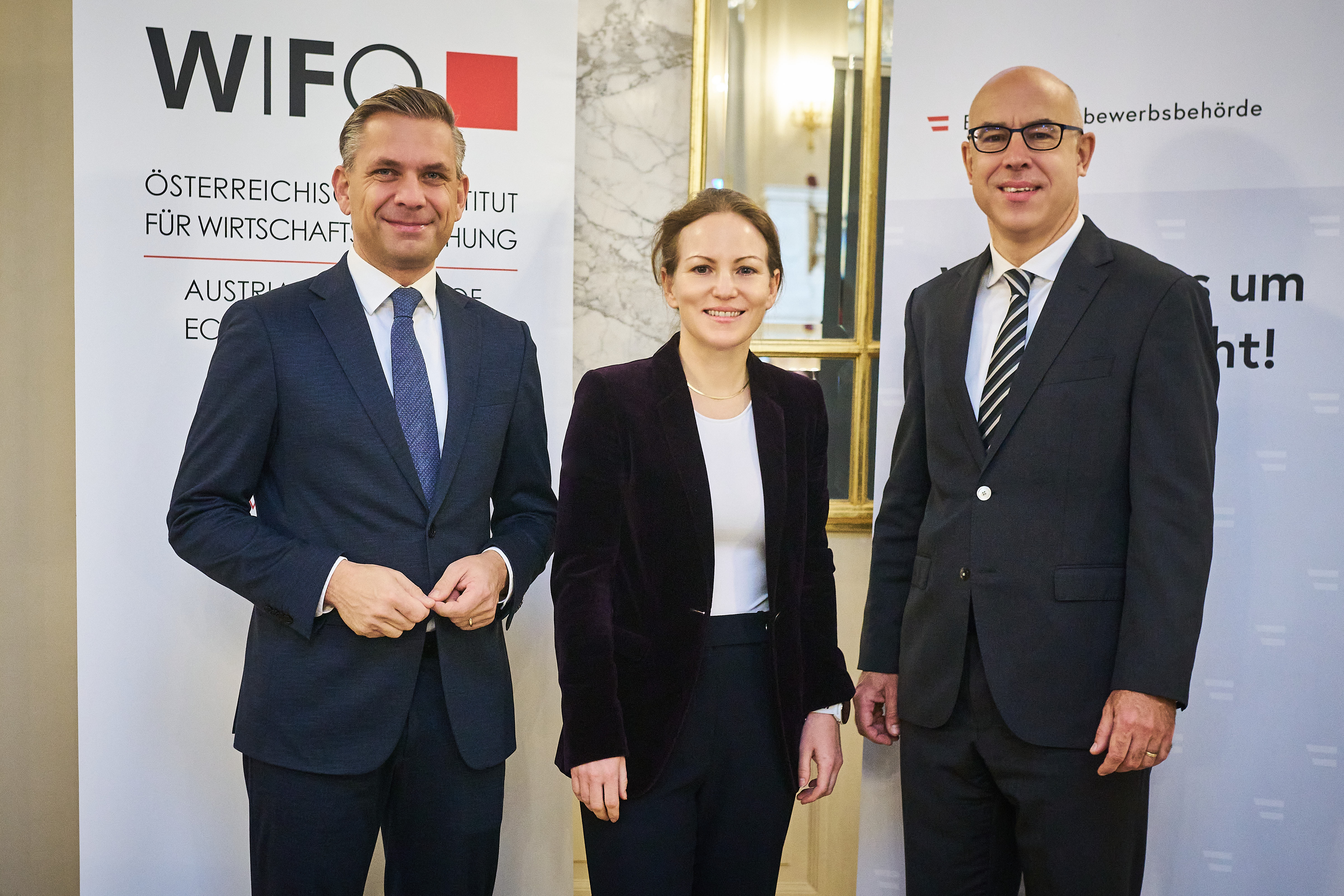
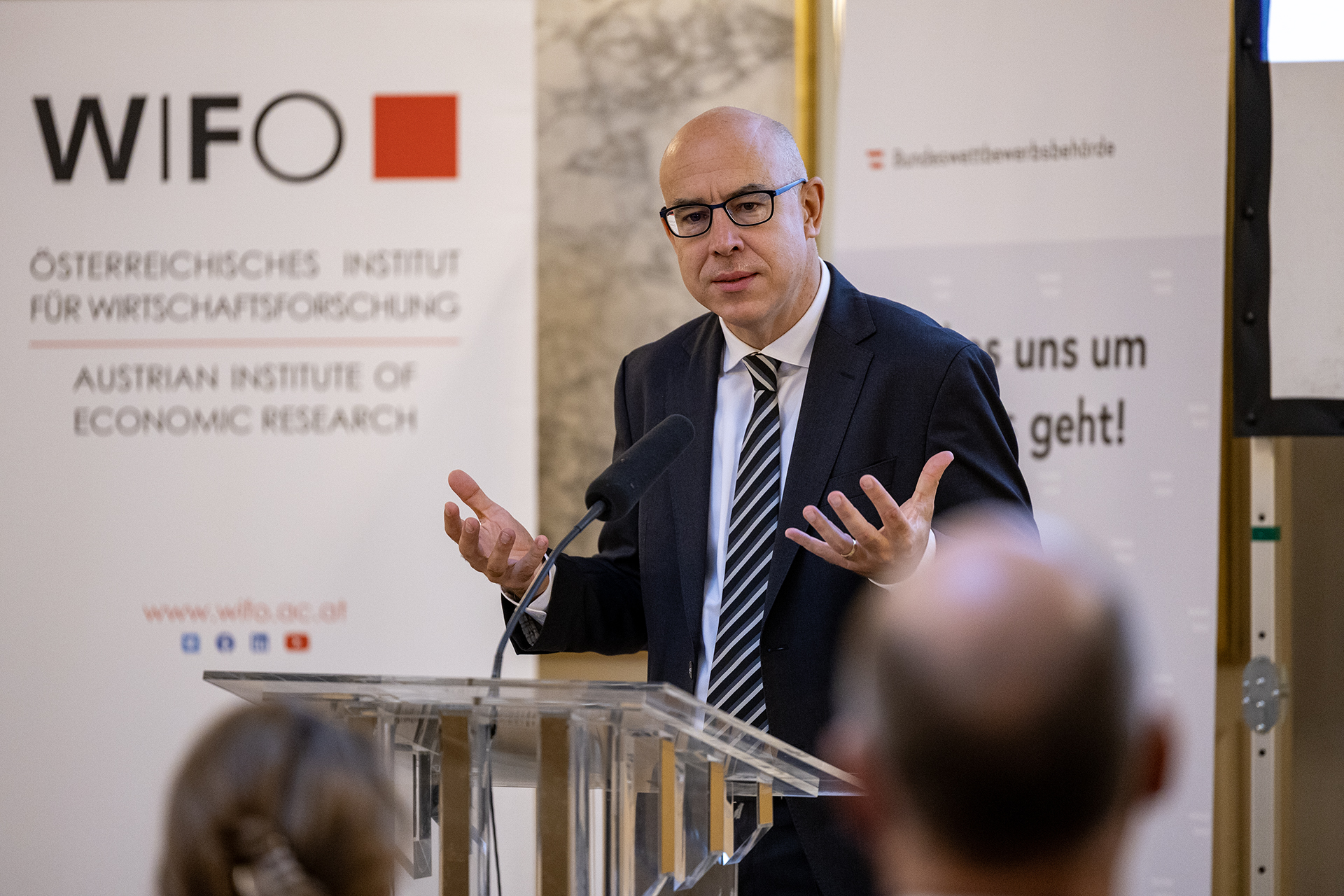
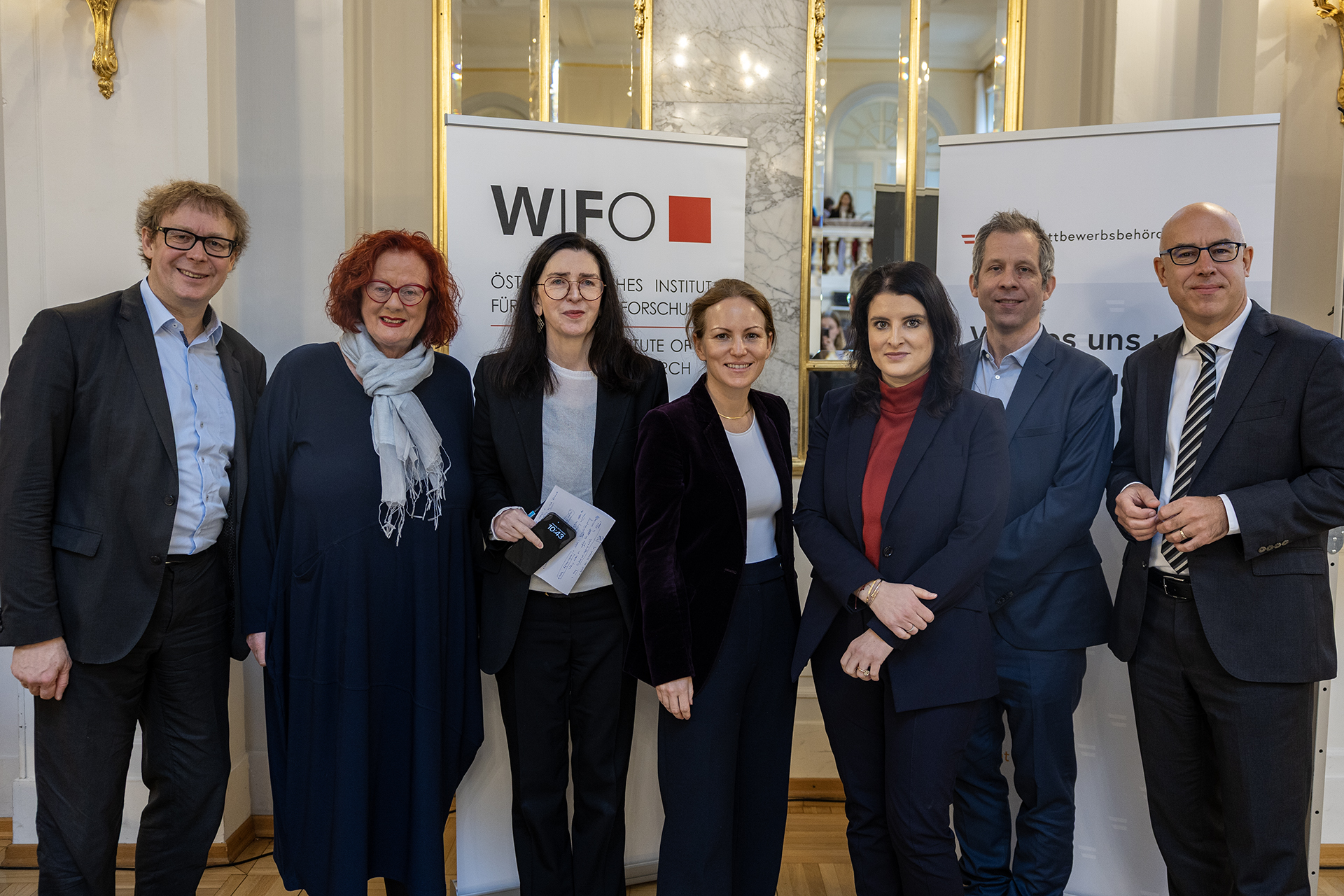
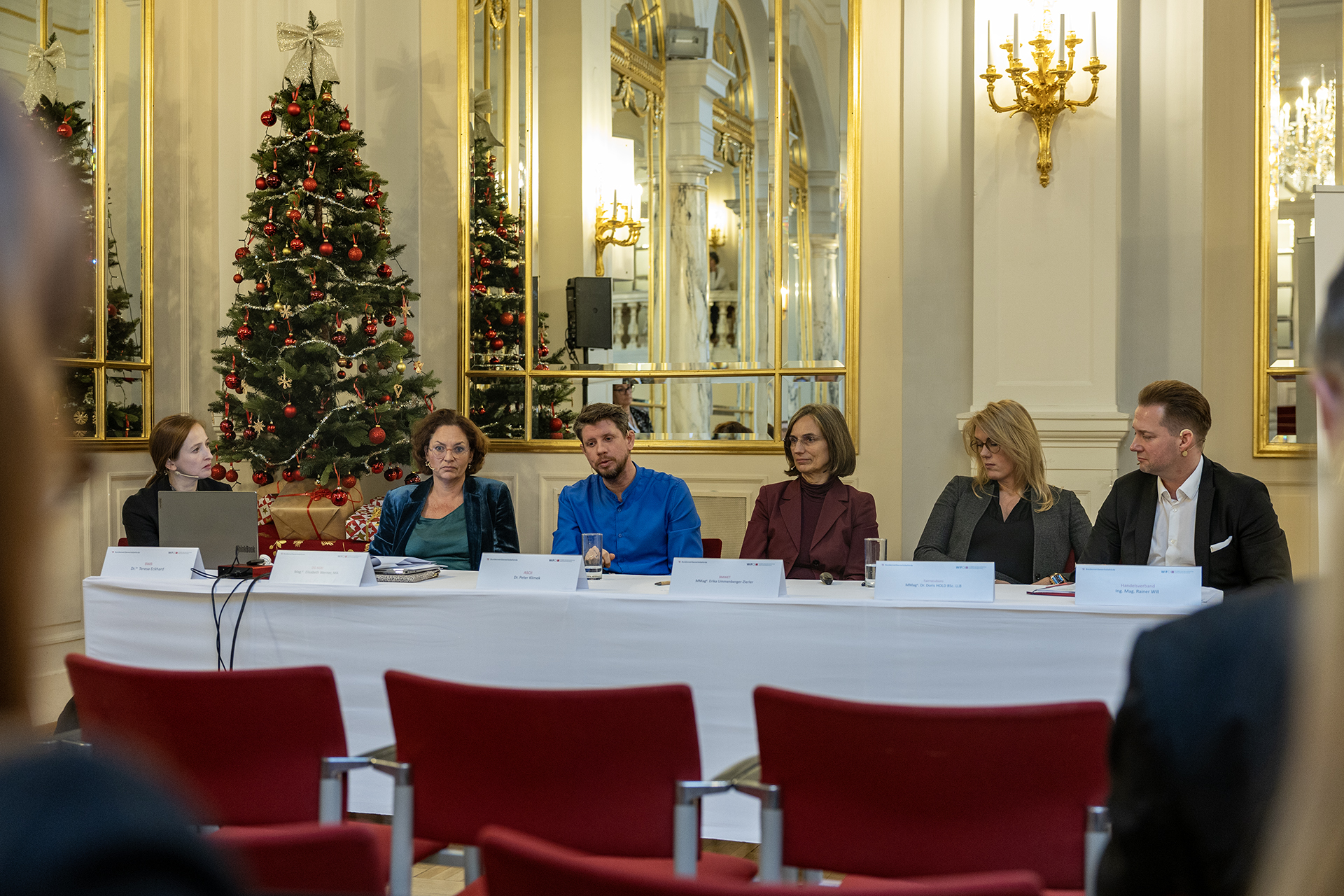
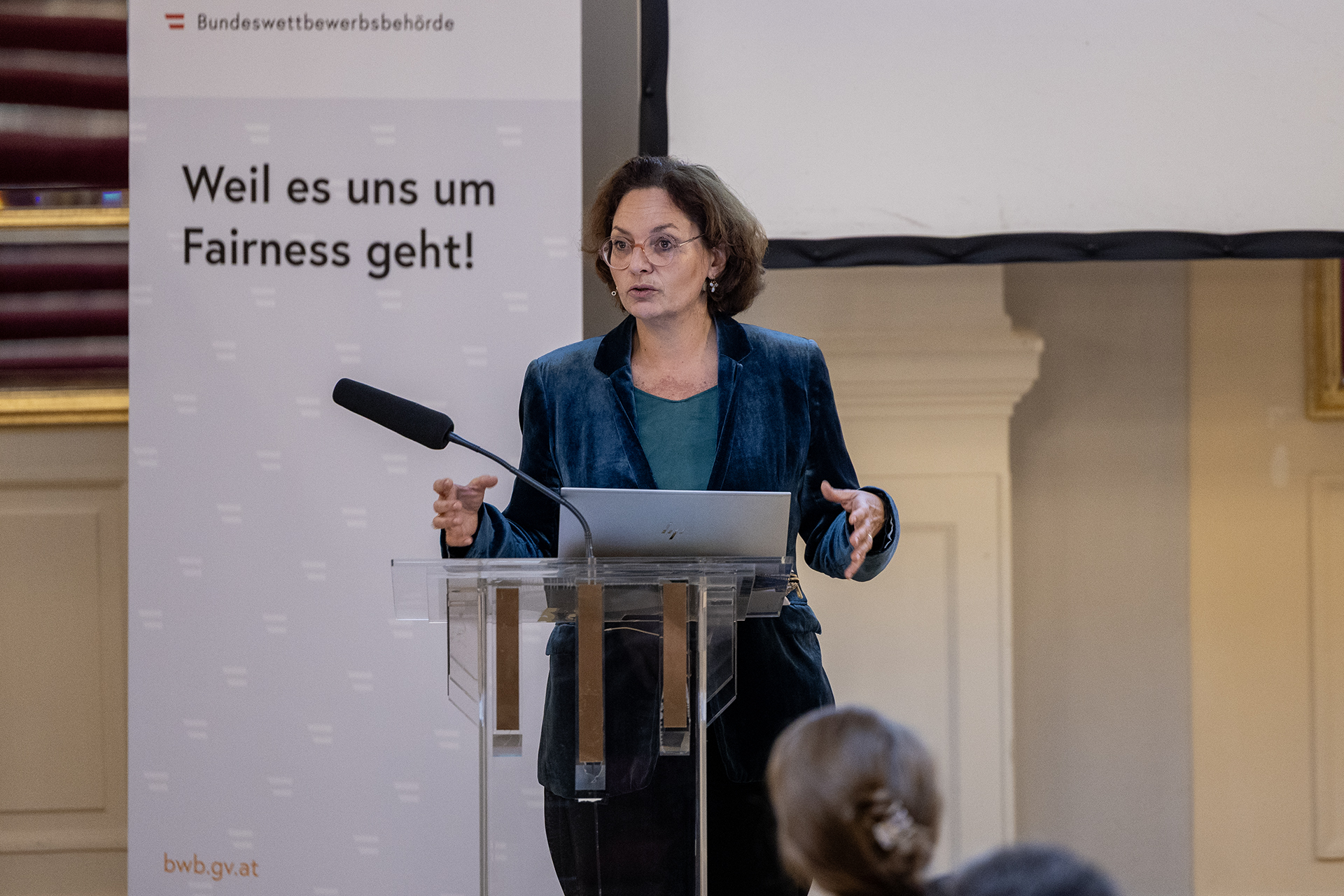
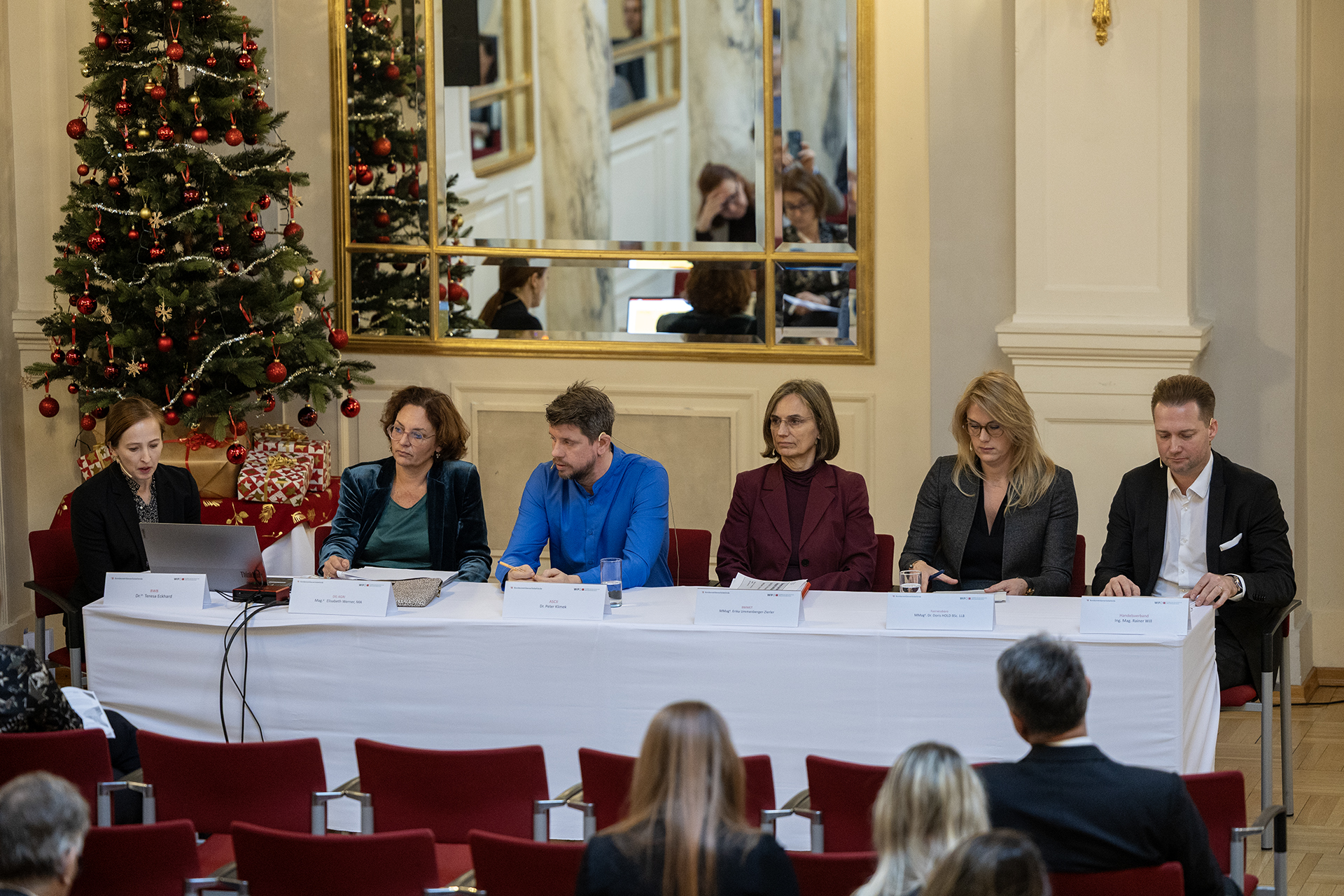
The themes of the event were current economic and competition issues. Natalie Harsdorf (AFCA), Gabriel Felbermayr (WIFO), Helene Schuberth (Austrian Trade Union Federation), Tobias Schweitzer (Chamber of Labour), Claudia Huber (Austrian Federal Economic Chamber) and Justus Haucap (Düsseldorf Institute for Competition Economics) discussed Austria’s strategy for industry and how to bring industrial and regulatory politics under one future-proof hat. Moderator Andrea Hodoschek (Kurier newspaper) highlighted the core challenges in the current economic policy debate. High inflation and growing pressure along the entire value chain were further key discussion points. A shared concern was to strengthen competitiveness in a sustainable manner. Individual contributions covered a range of topics, from concrete economic policy measures to fundamental questions such as the difference between location and industrial policy. It became evident that competition was understood as a strong pillar of economic order and was consistently included in all considerations.
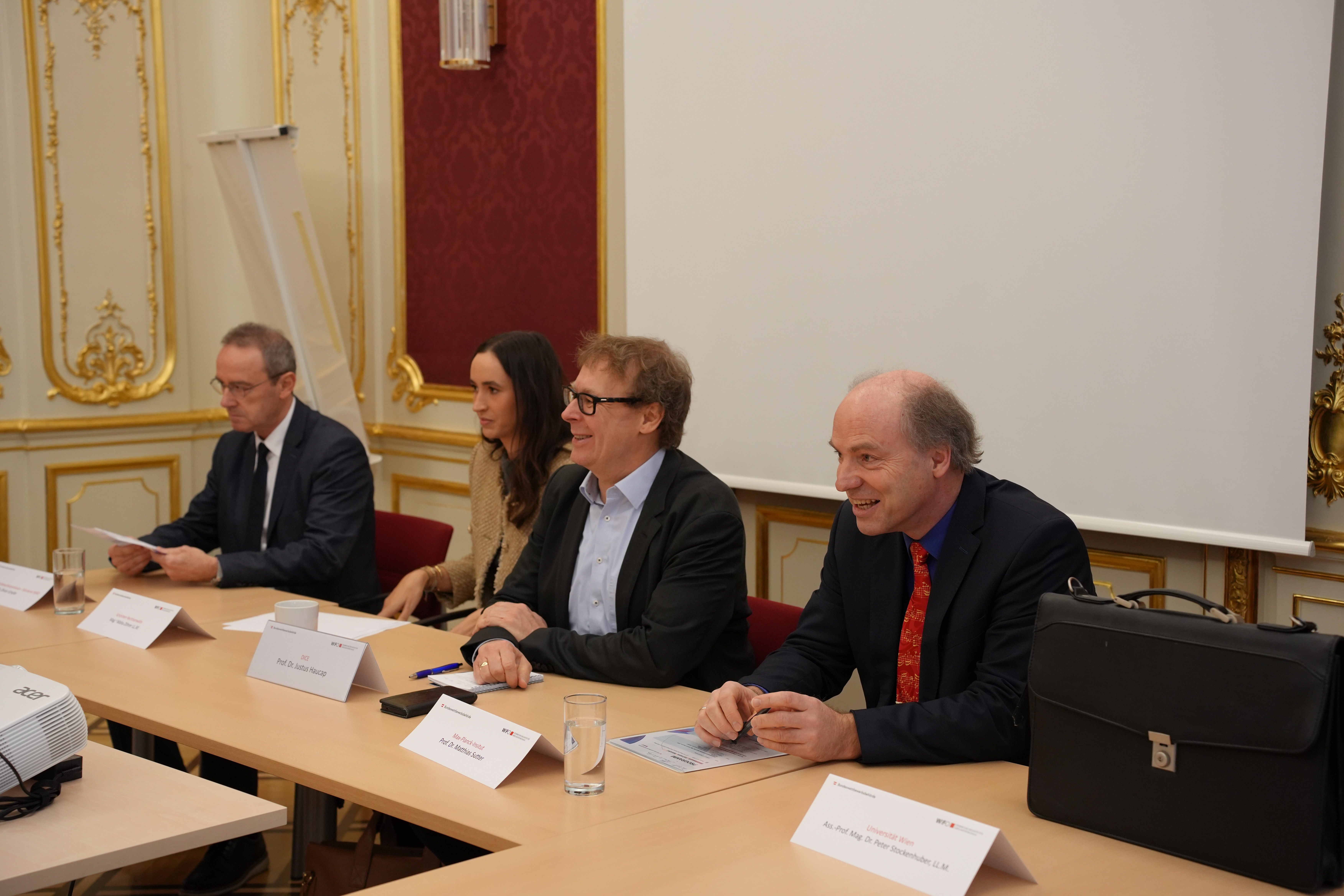
Later in the morning, participants had the choice between two breakout sessions. One session was dedicated to the topic of “Fairness in the value chain: Claim and wishful thinking” with a critical keynote by Elisabeth Werner, Director-General of the European Commission’s Directorate-General for Agriculture and Rural Development (DG AGRI). Her talk focused on current preliminary ruling proceedings in the area of agriculture and retail submitted by Austria to the Court of Justice of the European Union (CJEU). The concurrently held panel “Competition viewed through the lens of sport” was opened with an impulse by Matthias Sutter of the Max Planck Institute. It put forward the interesting proposition that competition functions as an essential element in (elite) sports, while performance in many other areas of our society is increasingly called into question. Both topics were further discussed during the panel discussions with experts from various sectors.
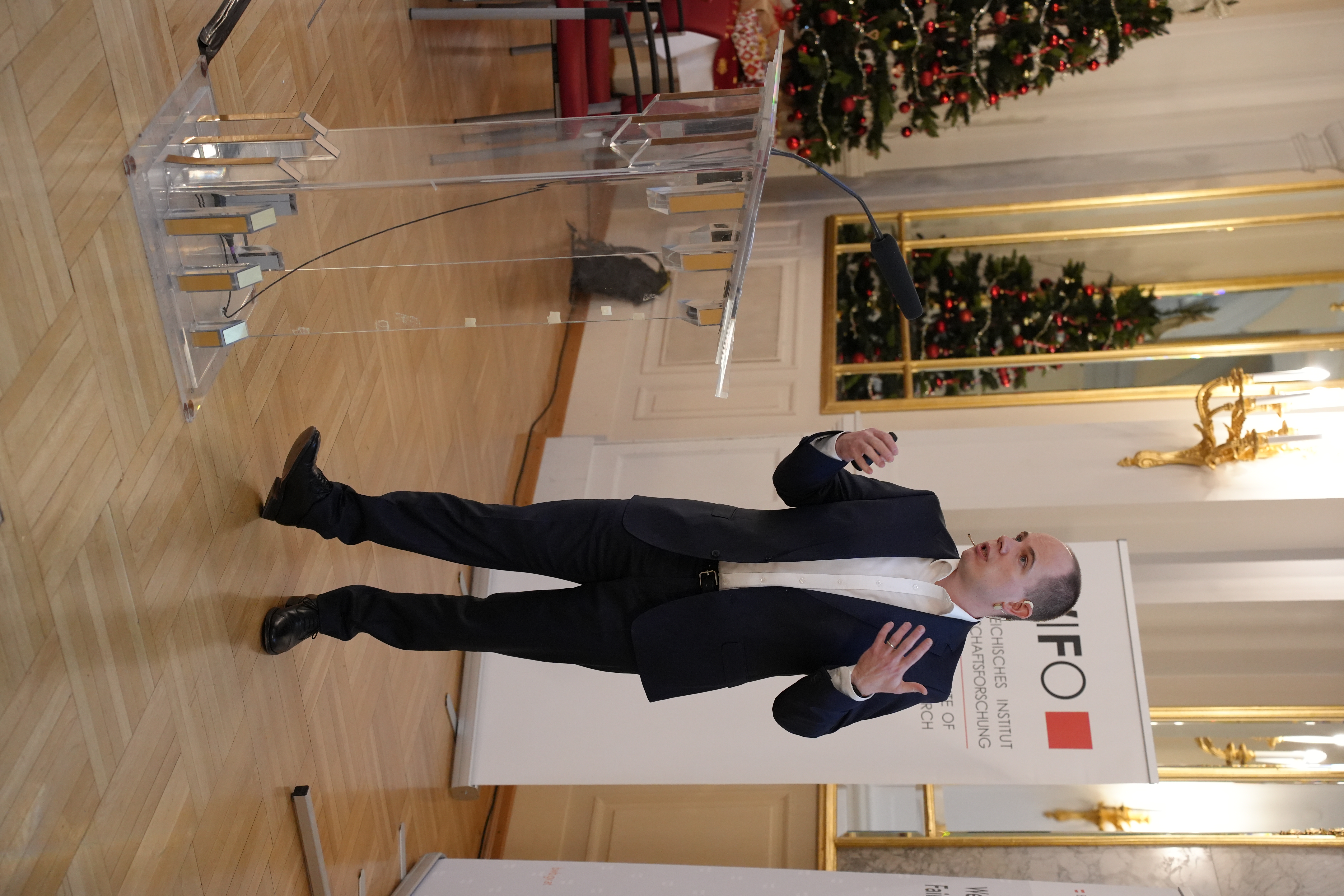
Bernhard Kasberger (WIFO) kicked off the afternoon session with a keynote entitled “Energy economy revisited”. A lively discussion including contributions from Susanna Zapreva (Verbund), Wolfgang Urbantschitsch (E-Control), Martin Janda (AFCA) and Franz Schellhorn (Agenda Austria) followed, with speakers outlining their different views on this topical subject. This panel was moderated by Agnes Kügler (WIFO).
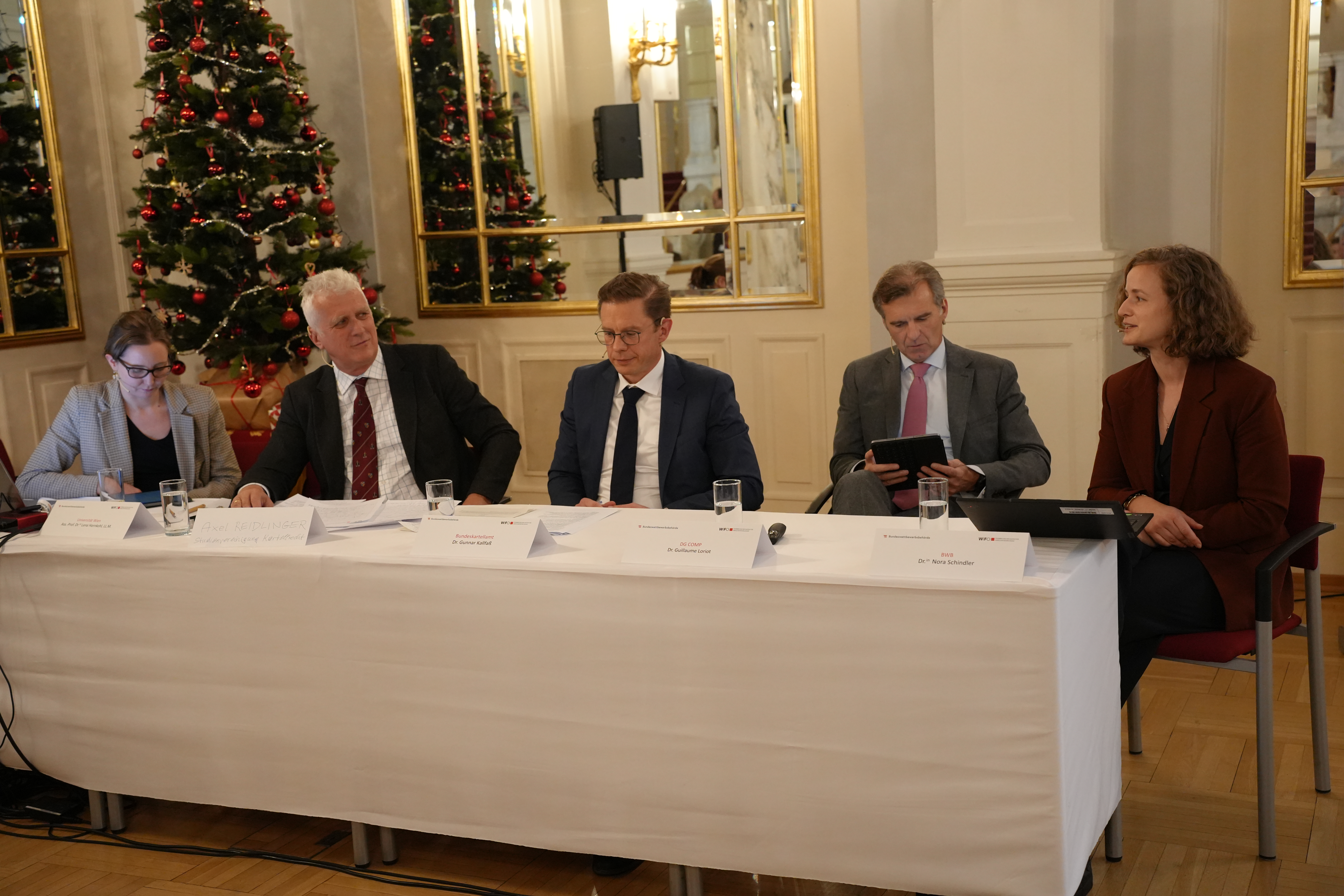
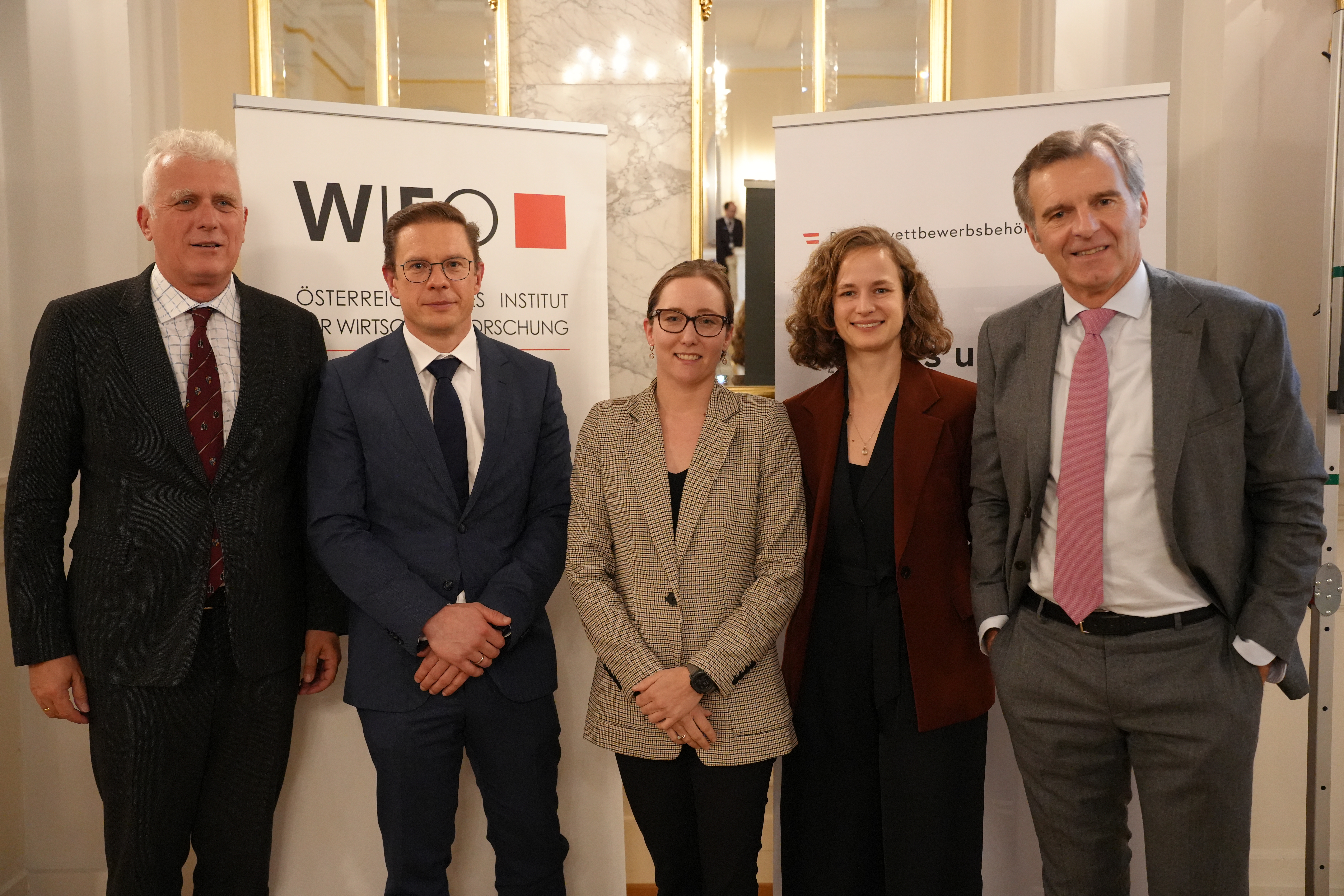
The event was rounded off by Guillaume Loriot, Deputy Director-General for Mergers at the Directorate-General for Competition (DG COMP), who looked into “Merger Control in Transition: The Dawn of a New Era?”. His keynote was followed by a panel discussion involving representatives from DG COMP, the German Bundeskartellamt, the German Studienvereinigung Kartellrecht and the University of Vienna, moderated by Nora Schindler (AFCA). The discussion centred primarily around the Commission’s current consultation on the Merger Guidelines, the digital transformation and its impact on merger control. “Our task is to distinguish scale that supports the Single Market from scale that harms competition, and to assess both in a way that is grounded in market realities and evidence,” stated Loriot.
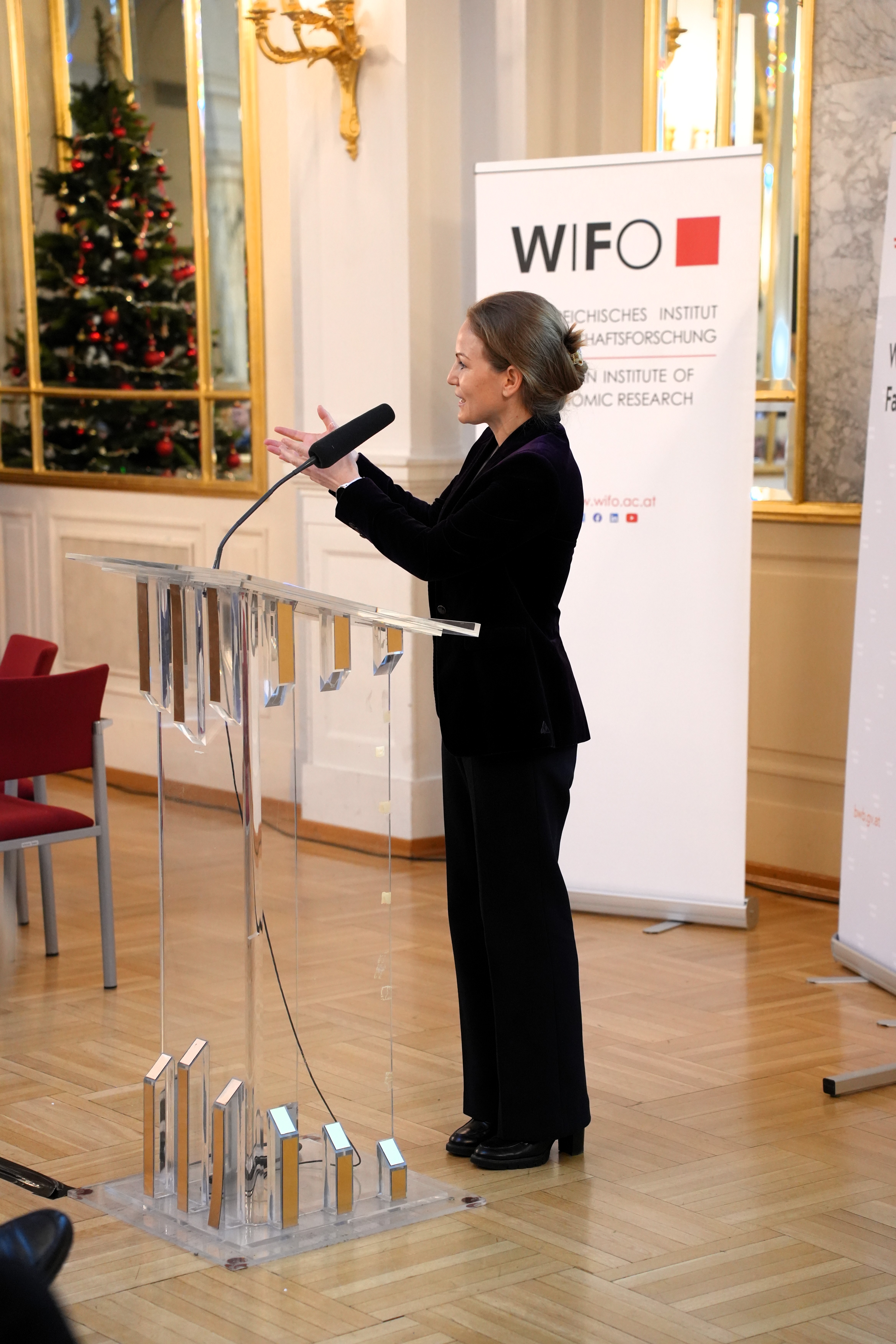
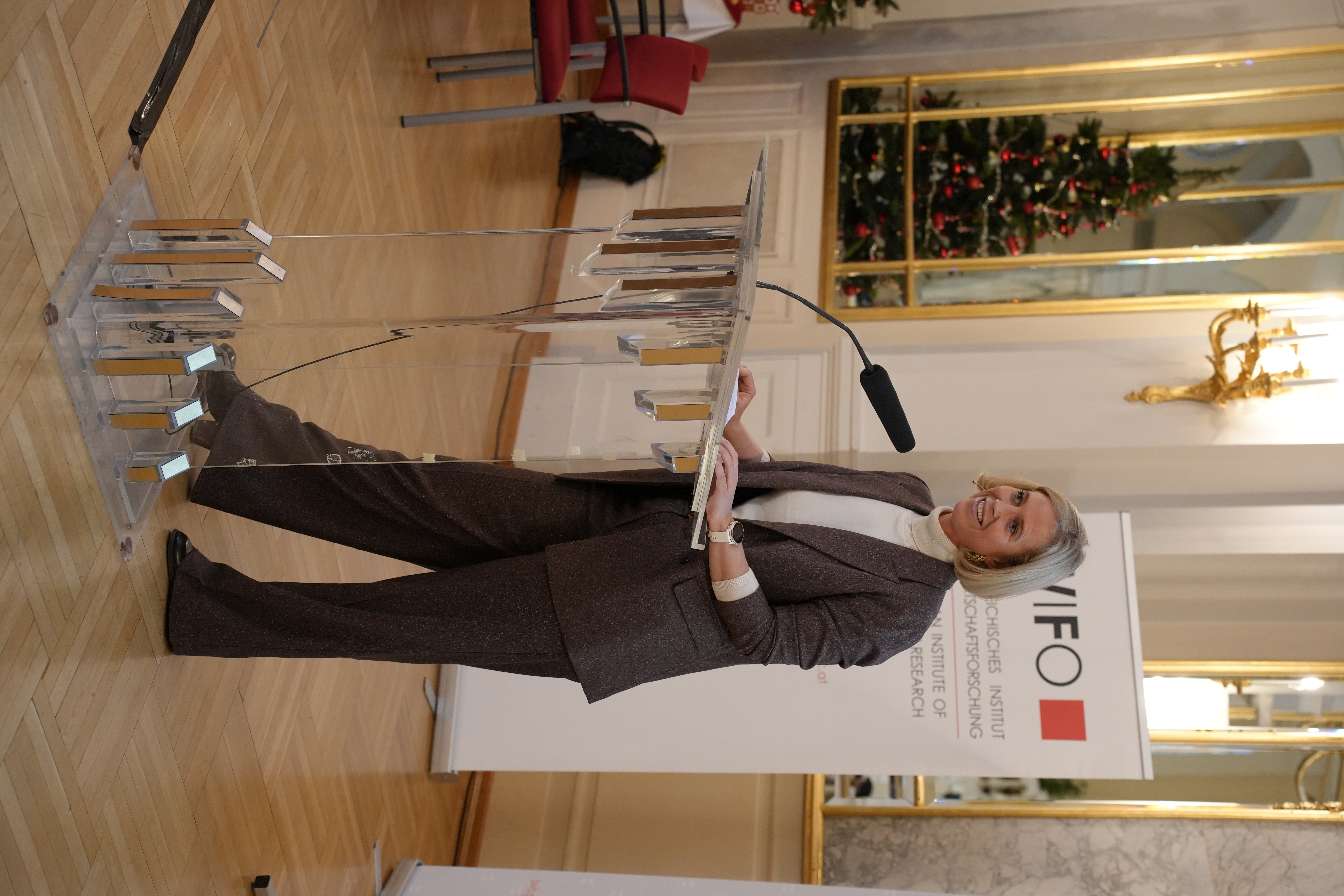
“In 2025, Austria has faced many challenges, and effective competition policy and efficient competition enforcement have helped tackle these. Competition is not an end in itself but an essential foundation for innovation, diversity and prosperity. Austria in particular, with its SME share of more than 90%, has a strong interest in functioning and fair competition, in Europe and all over the world,” summed up Natalie Harsdorf, Director General of the AFCA.
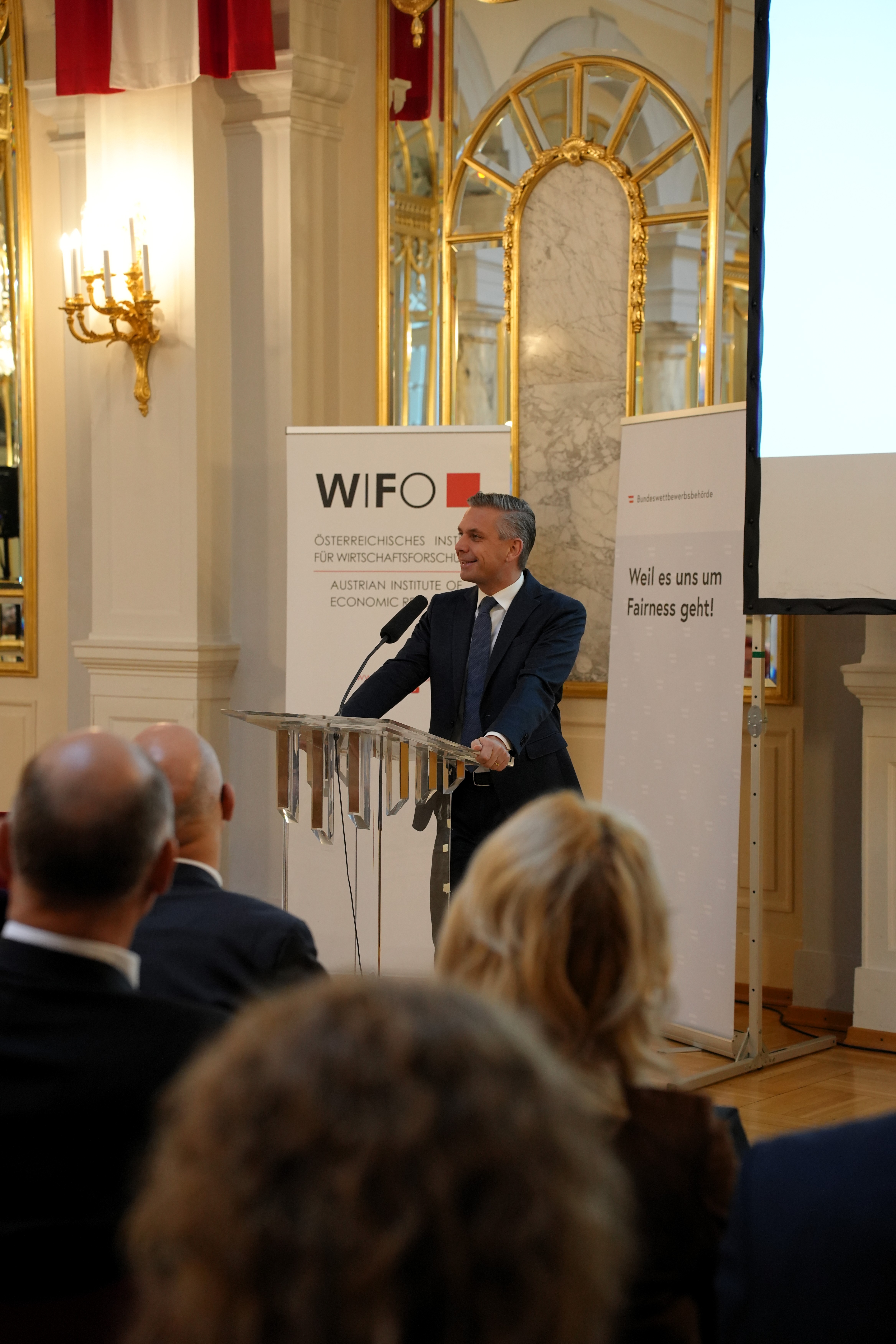
“We need a return to performance and competition. We surely do not want Austria to be at the bottom of the growth rankings. If we want to secure our prosperity and our welfare system, we must once again drive genuine economic upturn. This also means ensuring that competition is working well, that there are clear rules in place, that market power is not being abused, and recognising that greater choice leads to lower prices. I wish to thank everyone who is working tirelessly to achieve this, especially the employees of the Federal Competition Authority” concluded Economy Minister Wolfgang Hattmannsdorfer.
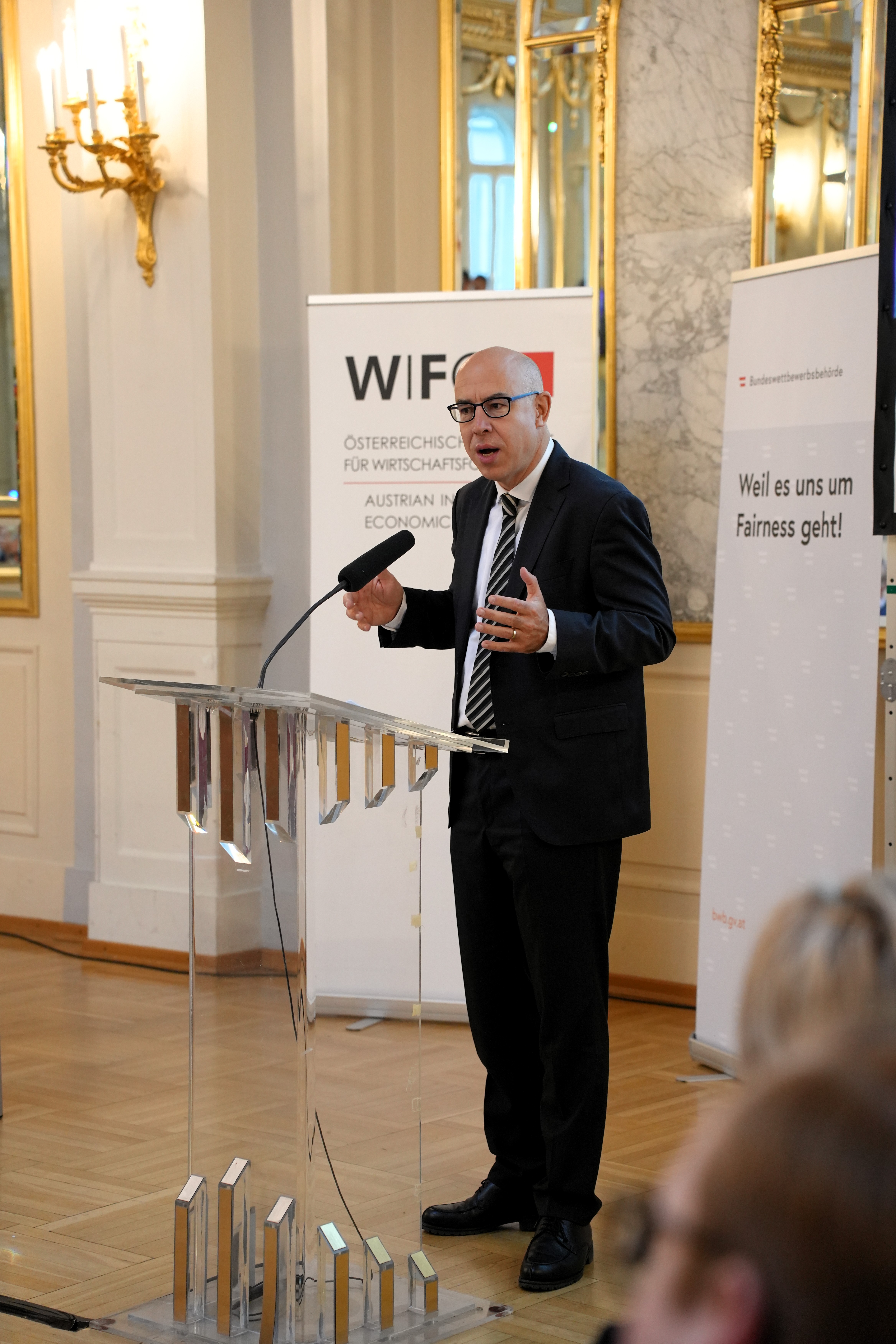
“To get our industry back on track for growth, we need a credible strategy to lower energy costs, red tape and non-wage labour costs, and we need open retail and procurement markets, efficient infrastructures and stable framework conditions, both at European and at Austrian level. Restricting international competition or discriminating international providers is not a path we should follow. It would only lead to higher prices, lower quality and reduced productivity growth. To ensure competition is not distorted, we need to consistently apply expedient Carbon Border Adjustment Mechanisms and WTO law,” insisted WIFO Director Gabriel Felbermayr.